
QINGDAO GLOBALSTAR GLASS TECHNOLOGY CO., LTD.
QINGDAO GLOBALSTAR GLASS TECHNOLOGY CO., LTD.
QINGDAO GLOBALSTAR GLASS TECHNOLOGY CO., LTD.
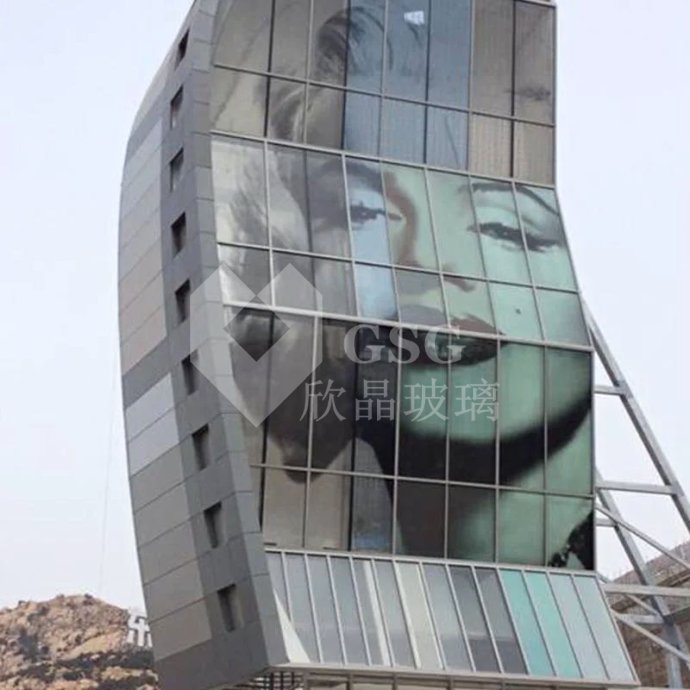
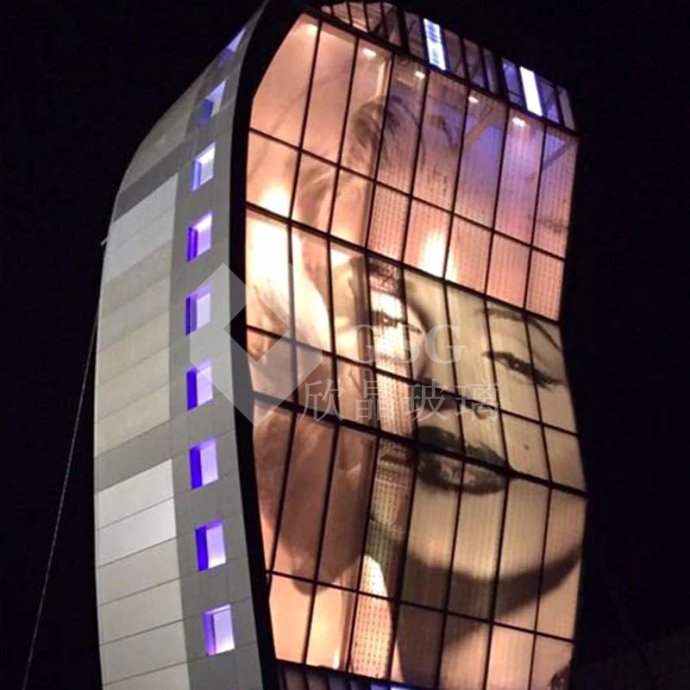

Traditional enameled glass is screen-printed with inorganic high-temperature ink, which is then fixed to the glass surface through high-temperature sintering. Dip-Tech digital enameled glass technology, on the other hand, uses digital printing, eliminating mechanical screen printing methods. The inorganic high-temperature ink is printed directly onto the glass. After tempering, the glass exhibits unparalleled resistance to acids, alkalis, corrosion, and weathering.

Tempered glass is made by heating annealed glass to 620 degrees Celsius in a furnace. From the furnace, the glass is rapidly cooled by jets of cold air, maintaining tension at the center while compressive stress is generated on the surface.
Tempered glass is made by heating annealed glass to 620 degrees Celsius in a furnace. From the furnace, the glass is rapidly cooled by jets of cold air, maintaining tension at the center while compressive stress is generated on the surface.
Tempered glass is made by heating annealed glass to 620 degrees Celsius in a furnace. From the furnace, the glass is rapidly cooled by jets of cold air, maintaining tension at the center while compressive stress is generated on the surface.
Tempered glass is made by heating annealed glass to 620 degrees Celsius in a furnace. From the furnace, the glass is rapidly cooled by jets of cold air, maintaining tension at the center while compressive stress is generated on the surface.
Tempered glass is made by heating annealed glass to 620 degrees Celsius in a furnace. From the furnace, the glass is rapidly cooled by jets of cold air, maintaining tension at the center while compressive stress is generated on the surface.
Tempered glass is made by heating annealed glass to 620 degrees Celsius in a furnace. From the furnace, the glass is rapidly cooled by jets of cold air, maintaining tension at the center while compressive stress is generated on the surface.
Traditional colored glaze glass is made by printing inorganic high-temperature ink onto glass using a screen printing process, and then fixing the ink onto the glass surface through high-temperature sintering.
Stained glass, also known as painted glass, is made by using a roller printing machine to apply enamel of different colors to the entire glass surface. The paint surface is smooth, flat and easy to clean.
Globalstar acid-washed glass is based on an acid-etching process, mixed with mirror, titanium or wire mesh technology, and processed on one side of the glass to give the glass a three-dimensional view, allowing light to pass through while providing privac
Copyright © 2025 Qingdao Globalstar Glass Technology Co., Ltd. Powered by HiCheng
SiteMap Privacy Policy